
Football Kits: Transcending the Boundaries of Identity and Culture
Football Jerseys as vibrant symbols of identity and culture.

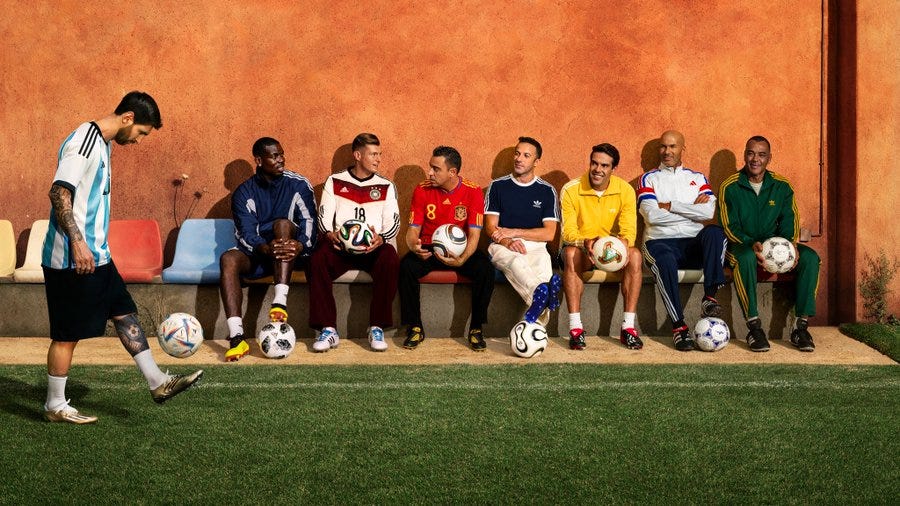
Football kits have carved a unique space in our lives as they have transcended the boundaries of club allegiance to become vibrant symbols of identity and culture.
These kits have since evolved into a canvas where individual style meets the beautiful game.
From the pitch to the stands and even to our streets, these kits have become instruments used to declare our mood, aesthetics and identity.
Christopher Stride, a statistician at the University of Sheffield who has studied the evolution of football kits, notes that football shirts have evolved from what footballers wear on the pitch to leisure wear and fashion instruments.
"Football shirts have transitioned from a sportswear product whose primary purpose was for players to play in, through a period in which they became profitable replica sportswear for children, to becoming leisurewear for young adults, and then for adults of all ages," Stride says. "So designs now are influenced by the tastes of that mature adult market, with shirts often having a nostalgic angle.”
The early football kits were elementary as they were born out of necessity rather than design. In the mid-19th century, with the institutionalisation of the sport in England, players wore heavy woollen shirts made from cotton often in colours that were borrowed from school or club affiliations.
Although these early kits were practical in design they were a bit cumbersome to distinguish. Teams at that time differentiated themselves with simple patterns —hoops, stripes and halves as standardised uniforms were rare.
For instance, the 1870 match between England and Scotland where players donned makeshift kits, the English, White while the Scottish, Navy laid the foundation for national identity in kit design.
From the 19th century where heavy woollen shirts were in vogue to the modern era of sleek aerodynamic jerseys, football kits have evolved with the sports itself portraying societal change, technological transformations and the global expansion of the beautiful game.
Over time, football kits have spanned multiple decades becoming a symbol of club devotion, national pride and street fashion. Every football kit tells a story that carries narratives of belonging, triumph or misery.
For example the Netherlands orange kit used in the 1974 world cup portrays the fluidity of total football, with its vibrant hue igniting “Oranjegekte” across Dutch streets.
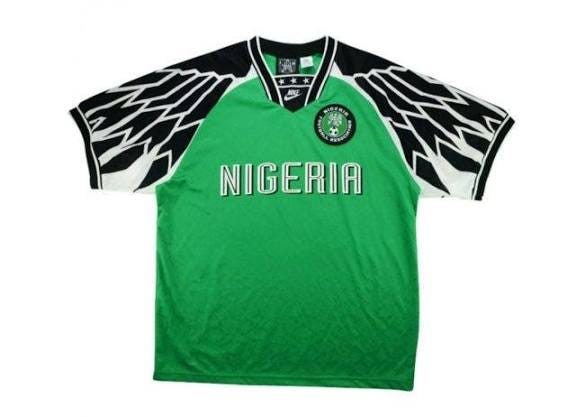
Also, Nigeria's World Cup 1994 kit with its green and black embroidery announced the arrival of the Super Eagles in the global football tournament. From Lagos to London, the jersey resonated with fans home and abroad.
Additionally, the yellow shirt of Brazil reinvented after the 1950 Marcanazo, emits the Samba flair of the likes of Ronaldinho and Pele. Colombia’s colourful designs from the 1980s to its 2018 retrostripes portrays the country's strength in adversity.
While the likes of Umbro and Adidas transformed kits into fashion staples, these designs have become cultural touch points for people in the modern day as we see how football kits are worn in the stadiums, in music videos and even at protest grounds.
Over the years, the evolution of football jerseys have reflected football's transformational journey.
Early designs had prioritized function —wool for warmth, colours for distinction, but as time went on, these designs grew into symbols of identity as clubs and countries institutionalised their legacies through these kits.
The post War era saw the global prominence of football jerseys as its spread was amplified by television. The 1970s had introduced commercialization with brands like Adidas branding the Netherlands Orange with three stripes.
Furthermore, the 1980s embraced bold patterns as exemplified in Colombia’s kit. By the early 1990s, kit culture was already globalized with Nigeria’s designs igniting street wear trends.
This transition from practicality to fashion identity opened up opportunities for global brands to enter and define the football fashion landscape.
Adidas, Umbro,Nike and Puma who have dominated these landscapes have been architects of football’s global fashion image.
For example, Adidas pioneered the iconic three-stripes designs from the 1970’s tracksuits, bridging sports and style.
Umbro on the other hand with its heritage designs like Liverpool‘s 1997 red, evoked terrace pride.
Nike brought forth innovation with their bold aesthetics and cultural resonance. Puma entered the scene as it began experimenting with designs, turning kits into symbols of style and sustainability.
A Decade of Transformation
The 1990’s proved to be a decade of transformation for football kits as the kits produced reigned amongst fans of that generation and future generations to come.
Nigeria’s 1994 World Cup kit crafted by Nike became popular, redefined kit design with bold aesthetics and cultural resonance.
The kit was colourful and vibrant as it adorned the national colours of green and white.
Inspired by Igbo and Yoruba textiles, it was clearly a departure from the conventional design styles of that era.
Stars like Jay-Jay Okocha, Rashidi Yekeni, Sunday Olise donned the jersey as the Eagles who were featuring in the World for the first time gained a cult following.
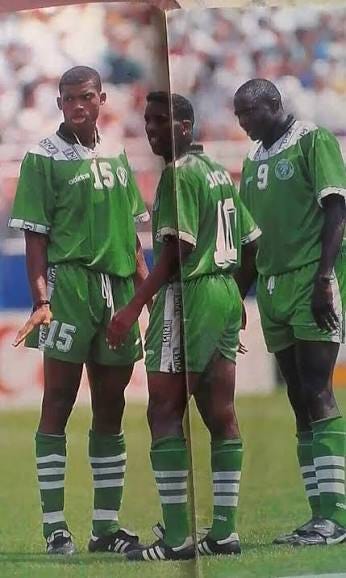
The intricate pattern of design with its loose fittings which was typical of the 1990’s kits made it a visual standout. Nike’s design of the Nigerian kits fused cultural heritage with modern aesthetics.
The kit which emanated from Nigerian arts with its angular patterns used woven fabrics making it a symbol of national pride and identity. Globally, the jersey replicas sold out across Europe and North America.
Building on this legacy, the 1996 Olympics kit featured a deeper green with a dynamic eagle motif. The jersey was worn during Nigeria’s gold medal run which included a shocking 3-2 defeat over Brazil.
These kits influenced global fashion as urban fashion brands like Sean John and Fubu adopted similar styles.
Little wonder the 2018 World Cup kit was inspired by the 1994 design with its zigzag green and white pattern. The jersey, which sold over three million units pre-release, became a fashion staple worn by celebrities like Skepta and Wizkid.
Brazil’s 1998 World Cup kit which was also designed by Nike reinforced the yellow shirts' status as football's most sophisticated and iconic designs. The kit was built on the legacy of 1958 as it featured a modern fit with blue star accents above the crest, this represented Brazil's four world cup titles, and a sleek collar.
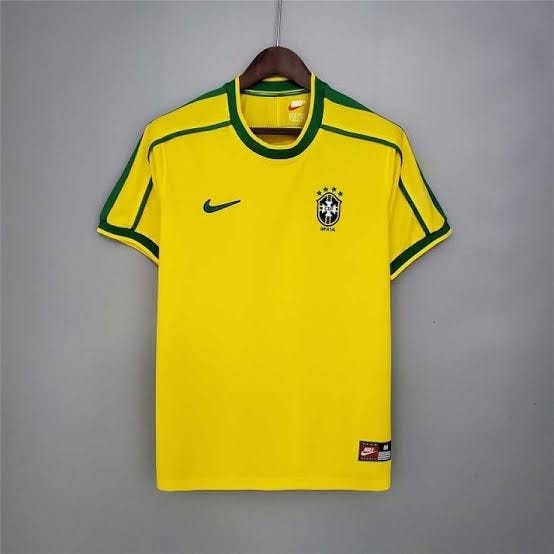
Nike’s marketing strategy featuring Rivaldo and Ronaldo’s trademark step overs amplified the kits appeal and reach. The kit influence extended to fashion even as Nike introduced a retro-inspired version in the 2000s.
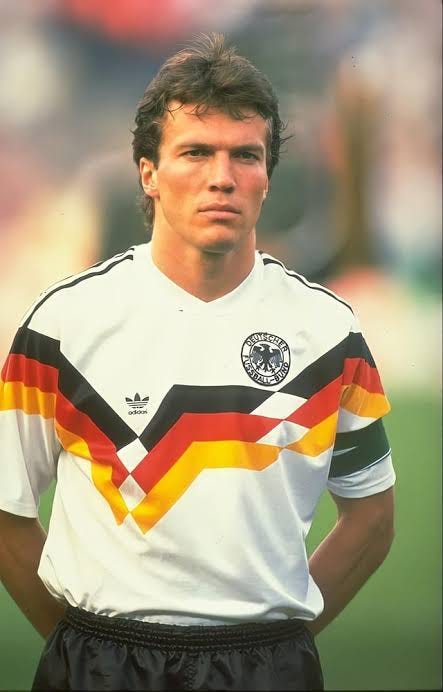
Adidas was also not left out as it also produced iconic kits like Germany's World Cup shirt in 1990. The black, red and yellow chest pattern evoked feelings of reunification and national pride. The kit which was worn during their 1-0 win over Argentina set a standard with its ClimaCool technology and bold design.
Also, Real Madrid's purple kit in 1998 by Adidas during their champions league triumph blended innovation with elegance.
From Germany’s tricolour to Jamaica’s 1998 green and yellow stripe design, Adidas portrayed the ability to merge national identity with global appeal, laying the groundwork for fan fashion.
Umbro also produced nostalgic jerseys like England’s 1996 Euro shirt which resonated with fans as replicas flooded Wembley.
Furthermore, Umbro’s Manchester United kit in the 1999 champions league designed in red and black colours, worn during the red devil's dramatic comeback against Bayern Munich reinforced Umbro's legacy.
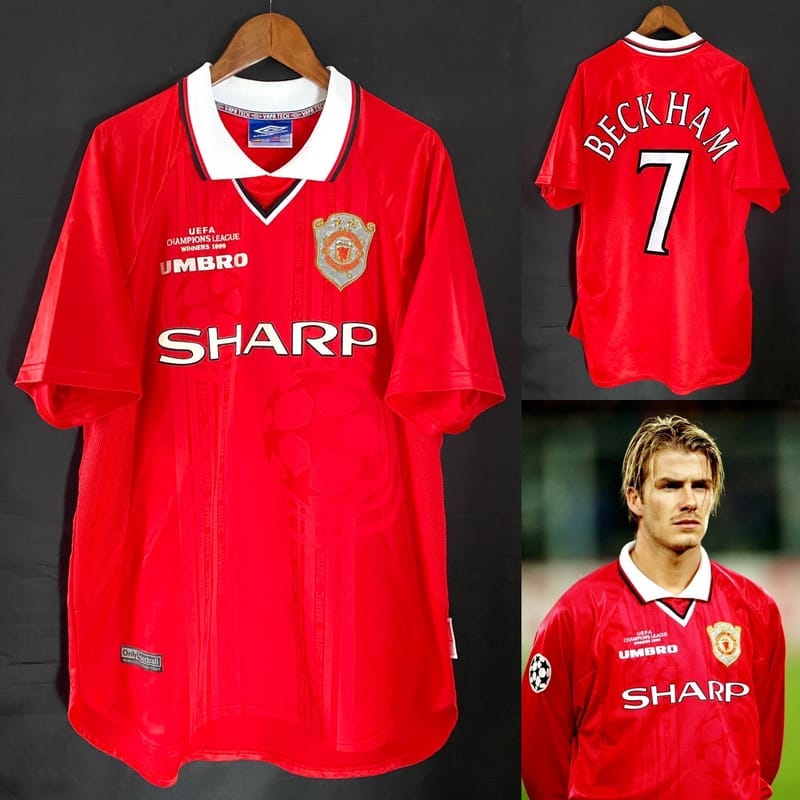
Umbro focused on classic cuts and embroidered crests appealing to football fans as the replicas were worn with jeans and trainers.
The Golden Age
The 2000’s was a golden age for football kits as brands like Nike redefined the design of football kits with cutting edge technology and daring designs. Nike's 2002 World Cup kits portrayed the brand's ambition to polish its already successful kit template.
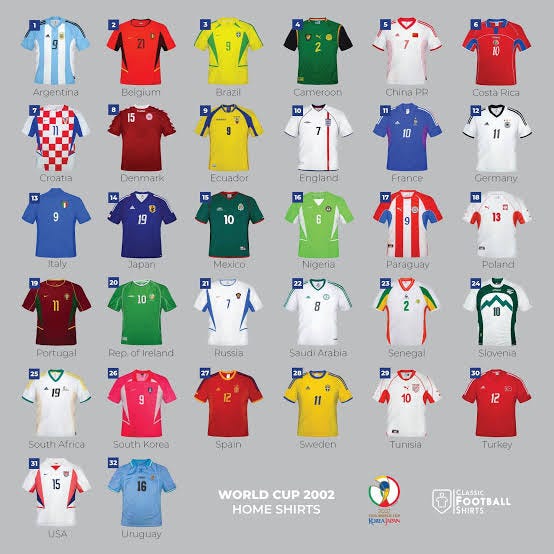
Although some would argue that their quest for perfection had led them to sacrifice some design choices in favour of simplicity, the kits were still iconic.
For instance Brazil's yellow kit had a subtle green piping with a modernized fit, this was worn during the country’s fifth World Cup triumph in Korea/Japan.
Also, Nigeria's Super Eagles had a fresh design that continued with Nike’s tradition of vibrant expression as it tapped into the cultural heritage of the country.
The green shirt had an eagle inspired chest pattern with a gradient fade, this infused the 1994 classic patterns while introducing the Nike Dri-fit technology for flexibility and breathability.
Its oversized design aligned with the street wear trends of 2000’s as we see that trend of wearing oversized fits resurfacing in the fashion trends of today.
The kit which takes cultural root from Nigerian textile designs was a favorite amongst Nigerian fans, home and abroad.
Also, the Netherlands 2006 World Cup kit modernized the orange shirt with its black design accents which paid homage to the 1974 total football era.
The kit which was worn during the Netherlands 2-1 win over Ivory Coast consisted of a lion crest and sleek silhouette that embodied Dutch pride.
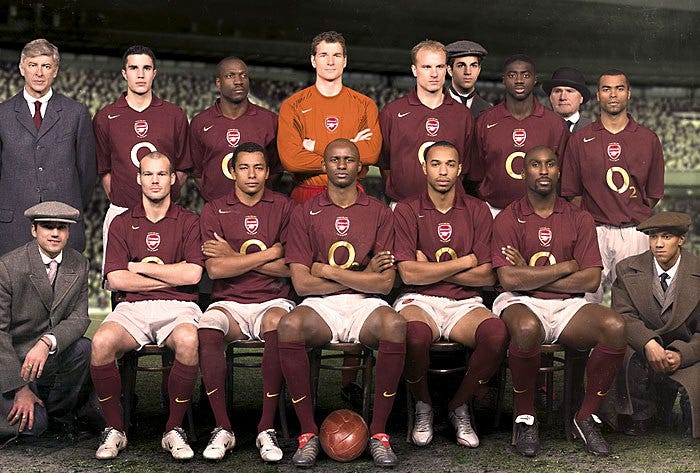
At club level, Nike’s club kits for Arsenal during its 49 games unbeaten run in the 2005-06 Premier League season was equally transformative and has a mass appeal even up till date.
Also Manchester United's red and white kit at the UEFA Champions League in 2008 prioritized performability with an aesthetic appeal that turned these kits into fashion statements.
Daniel Yaw Miller, a business journalist, explains how Armani, the late Italian designer, understood the cultural impact of sports in a way that few fashion designers did.
“If one person truly understood the cultural influence of sport and the marketing power of athletes, it was him. Armani threw himself and his eponymous brand into various different avenues across sports — from special design projects, tournament sponsorships and entire collections — going back decades” He writes.
He recounts how Armani's EA7 brand became the technical partner of legendary Italian team SC Napoli during the 2021/22 season as the brand designed all the club's jerseys, training kits and other onfield apparel for the team.
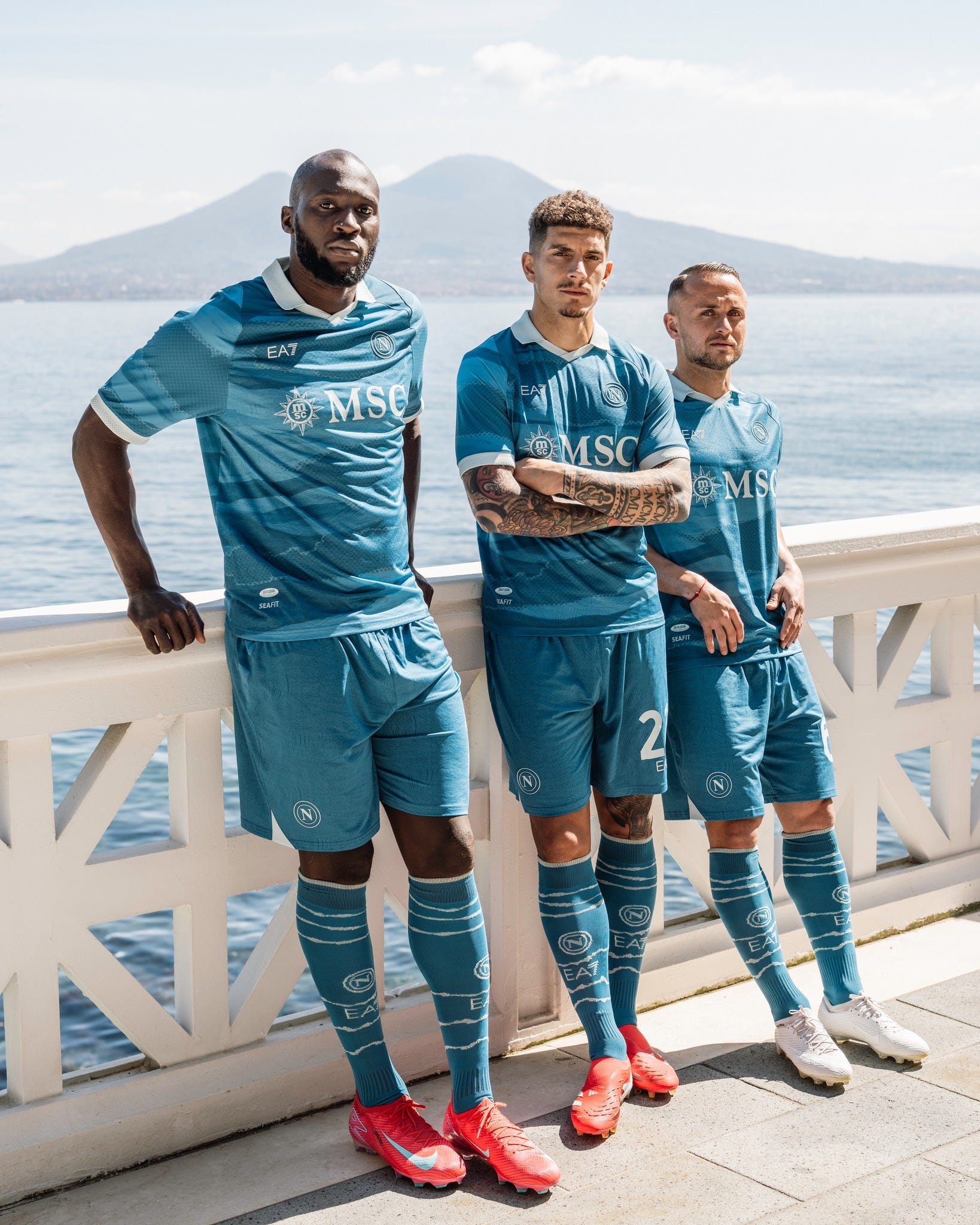
“EA7 also became the technical partner of legendary Italian team SC Napoli in the 2021/22 season, creating all jerseys, training gear and on-field apparel for the team, which again enjoyed unrivaled exposure and product placement when the club won the Serie A championship in 2023, its first in 33 years.” He states
He believes that the brand's expansion into sports kits was a masterstroke that revolutionised sports apparel with the brand's logo standing out amongst other mainstream sports wear brands like Adidas, Nike, Puma.
Aside from the popular sports wear brands, like Nike, Puma and Adidas, Reebok made a rare entry with its design of Colombia’s 2001 Copa America kit.
The yellow shirt with blue and red geometric patterns worn as Columbia celebrated its first Copa title on home soil was inspired by the national flag of the country.
Colombia's win over Mexico had sparked widespread jubilation as fans adorned replicas of the jersey in Bogata’s plazas.
Reebok's brief venture into football kit demonstrates how smaller brands could challenge the popular brands like Adidas and Nike by incorporating daring aesthetics even as their limited market share kept them within a niche.
Adidas’s influence on fan fashion coupled with their collaborations with designers like Yohji Yamamoto whose Y-3 line fused haute couture with sportswear became a fashion staple in the 2000’s bridging urban culture and football as Hip-Hop artists like Jay-Z donned the kit.
They also produced classic designs like France’s 2006 World Cup kit which was a blue shirt with red stripes worn during Zidane’s iconic headbutt of Mattarazzi in the final.
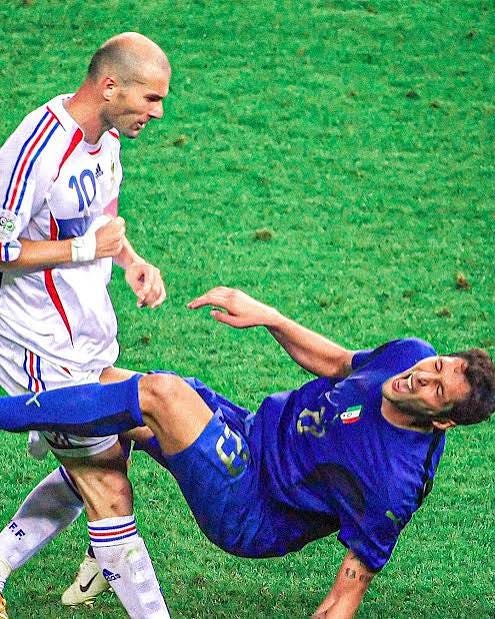
Also, Bayern Munich's champions league kit by Adidas which had silver accents and Argentina’s 2006 sky blue and white stripes worn during Lionel Messi’s world cup debut also blended cultural heritage with modernity.
Umbro's presence within the kit scene was still felt although less dominantly, as they began working with smaller clubs. They produced Lens’s 2000’s red and yellow kits and Santos 's white kit.
Although they were less dominant in the kit scene they produced nostalgic jerseys like England's 2009 kit, a white shirt tailored with red trim which brought back memories from 1966.
The jersey which was worn during a 5-1 win over Croatia in a qualification match appealed to fans as its classic cuts contrasted with Nike’s flashiness.
Football Kits in the New Age
Fuelled by social media, the boom in retro streetwear styles and clubs increasing financial prowess, football kits were redefined in the 2000s to become a mixture of jersey, fashion and culture.
For instance, national team kits like Nigeria's 2018 Nike design with the green and white zigzag pattern, Netherlands 2014 minimalist orange, Columbia’s 2018 tricolour and Brazil’s 2018 textured yellow captured global attention.
This decade revolutionised kit fashion as teams like Arsenal, Paris Saint Germain, Roma, Ajax, Juventus and Venezia raised the bar designing jerseys that transcends football—blending culture, arts and commerce in novel ways.
Venezia Fc, an Italian clubside was dubbed the most fashion forward sports club in the world.
The incredible ascension of the Italian based clubside in both sporting and stylistic experience following the release of their Kappa sponsored kits in 2021/22 blew the game out of the water as the design partnered with NYC studio Fly Nowhere.
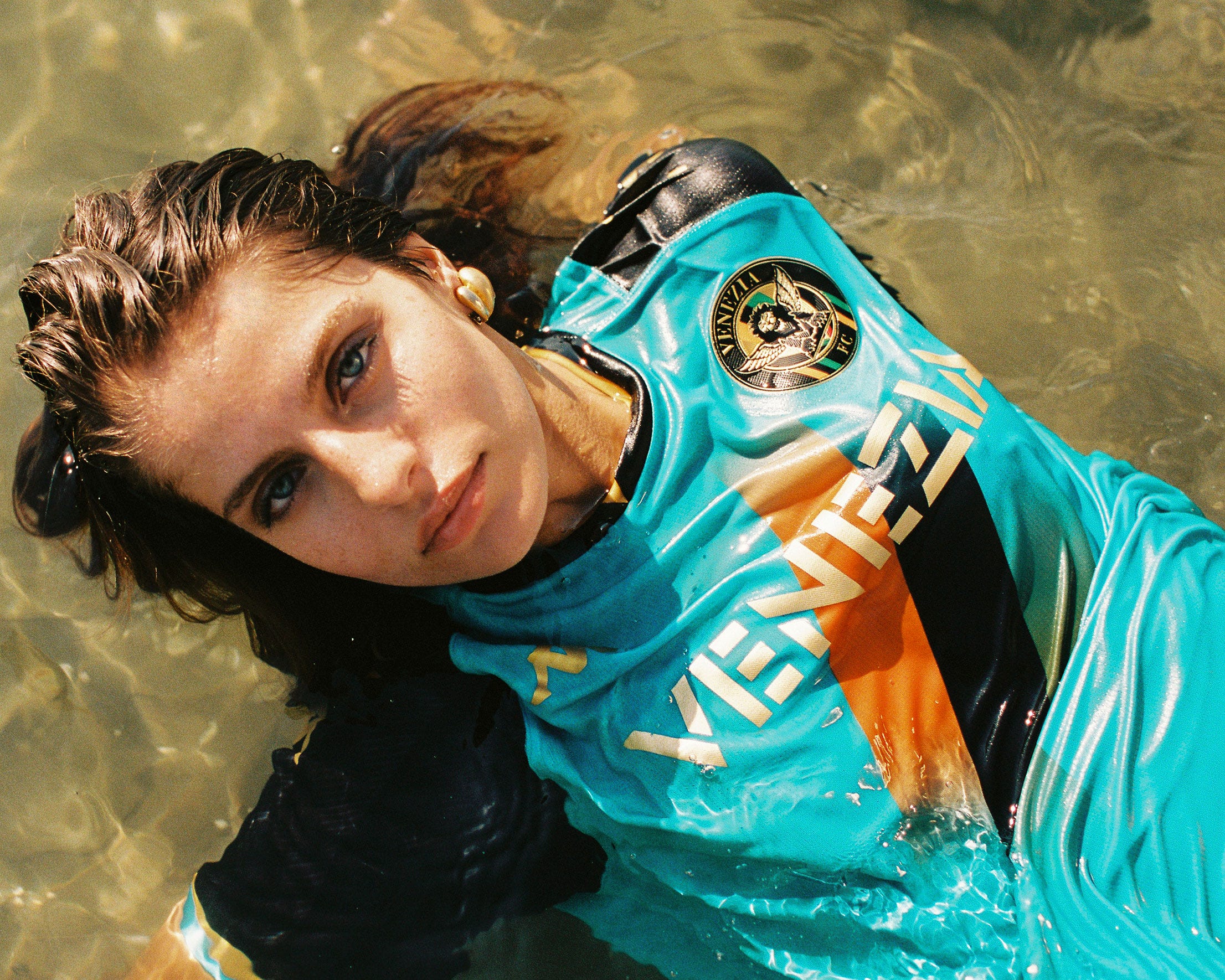
The club's 2024-25 Nike Nocta kits which introduced blue and gold designs embraced the long standing heritage of Venice with its sleek look that used lightweight fabric and an intricate tonal graphic that referenced the historical practice of mapping which Venezia city was known for during the 15th and 16th century.
Ted Philipakos, Venezia FC CMO while speaking on the influence of culture and tradition on the club's overall visuals notes that the ancient culture of the city informed the overall design, aesthetics and nature of the kits.
“Venice is at the heart of the brand,’ Ted explains, “It informs the overall aesthetic. It informs the look, feel, and nature of essentially everything we do. That’s probably most obvious on Instagram, where we share nearly as much city photography as football photography. But it goes much deeper than that.”
While the club's recently released kit which was themed with the Venetian flag funds a local NGO (Save Venice) focused on persevering the artistic heritage of Venice through education and conservation initiatives, Ted believes that all the jersey designs are inspired by the common mission of the club which is to serve as an Ambassador of Venice.
“All of the jerseys connect to the mission of the club, which is to serve as an ambassador of Venice,” Ted states.
Juventus’s 2021-22 fourth kit, with geometric patterns inspired by Turin’s nightlife fused Turin’s Calcio heritage with street culture, just like the club's 2019-20 third kit which had a bold aesthetic, debuted on fashion runways becoming a social media darling. The kits elevated Juventus beyond club loyalty to become a global trendsetter in kit designs.
Also, Ajax’s 2021-22 third kit by Adidas designed with yellow, red, green and a black base reggae inspired accents paid homage to Bob Marley’s “Three Little Birds” fan anthem.
Matched with bucket hats and vintage denim, it became a festival favorite as the jersey which was worn during Ajax's Eredivisie campaign sold out rapidly as it resonated with Dutch culture blending Amsterdam 's music scene with football.
Roma’s 2021-22 New Balance kits worn during Roma’s Conference League triumph was a retro that evokes memories from the 1980’s drawing inspiration from the eternal city's architecture. The shirt featured a subtle colosseum motif that resonated with fashion enthusiasts and fans alike.
Paris Saint-Germain’s 2018 Jordan collaboration also redefined kit culture as it merged football with streetwear. The black and white third kit which was worn by the likes of Neymar and Kylian Mbappe during the club's dominance in Ligue 1 featured the Jumpman logo as it became a fashion staple styled at the Paris Fashion week and other urban festivals.
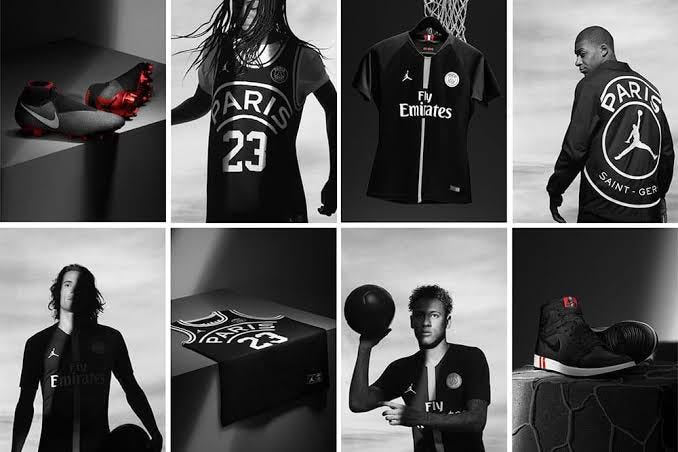
Arsenal's 2022-23 Adidas third kit designed with navy accents and a pastel pink was a streetwear hit. Worn by the likes of Bukayo Saka, the jersey was styled at urban fashion events.
In a world where trends change rapidly, football kits remain timeless as each fabric stitched comes with stories of devotion and defiance worn by fans who don't just see football as a game but as a way of life. As football evolves, so also would kits, as it would forever mirror the shared passion for the beautiful game.